Cypress, TX: (832) 648-1756

How Long Does It Take for a Wisdom Tooth to Emerge?


How Long Does It Take for a Wisdom Tooth to Come In?
Once a wisdom tooth starts to break through the gum line, it typically takes several months to a few years to reach its final position. While the initial ‘breaking through’ phase might cause acute discomfort for 7 to 10 days, the full journey from the jawbone to the surface is a slow process. For most people, these third molars begin to emerge between the ages of 17 and 25, though the exact timeline varies significantly based on genetics and available space in the jaw.
The Typical Timeline: From First Ache to Full Eruption
The eruption of wisdom teeth is rarely a single event; it is a series of movements that can span years.
Early Signs: The Initial Movement
Before the tooth is visible, it moves through the jawbone. You may feel a dull ache in the back of the jaw or pressure against your second molars. This stage can last for years before the tooth actually reaches the gum tissue.
Breaking the Surface: The Eruption Phase
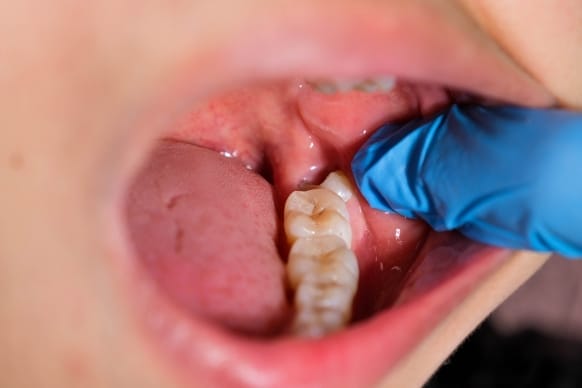
When the tooth finally pierces the gum (the ‘eruption’), you may see a small white nub or feel a flap of skin (operculum) over the area. This phase is often the most painful and is when you are most susceptible to pericoronitis, an infection of the gum tissue surrounding the crown.
Full Positioning vs. Partial Impaction
Ideally, the tooth continues to rise until it aligns with the other molars. However, many wisdom teeth stop halfway. A partially erupted tooth is one that has broken the surface but cannot move further, often because it is blocked by another tooth or the jawbone itself.
Factors That Influence Eruption Speed and Success
Not everyone’s wisdom teeth follow the same path. Several biological factors determine how long the process takes.
Jaw Size and Evolutionary Changes
Evolutionary biology suggests that our ancestors had larger jaws to accommodate a diet of raw plants and tough meats. As modern diets softened, human jaws became smaller. Today, many people simply do not have enough room for a third set of molars, which slows down or completely halts eruption.
Genetics and Ethnicity
Studies show that ethnicity plays a role in the presence and timing of wisdom teeth. Between 10% and 45% of people are missing one or more wisdom teeth entirely due to genetic variations. If your parents had late-emerging or missing wisdom teeth, you likely will too.
The Angle of Entry
The ‘trajectory’ of the tooth is critical. A tooth growing vertically will emerge much faster than one growing at an angle (mesial or distal impaction). Teeth that grow horizontally may never emerge at all.
Symptoms and Pain: What to Expect When They Grow
It is normal to experience some level of discomfort, but it should not be debilitating. Common symptoms include:
- Tender, swollen, or bleeding gums at the back of the mouth.
- Jaw pain or a persistent dull ache.
- Difficulty opening your mouth fully (trismus).
- An unpleasant taste or odor if food gets trapped under the gum flap.
- Occasional headaches or earaches due to referred pain.
When Wisdom Teeth Get Stuck: Risks of Delayed Eruption
When a tooth fails to emerge fully, it is considered ‘impacted.’ This can lead to several complications:
- Cysts and Tumors: Fluid-filled sacs can form around the unerupted tooth, potentially damaging the jawbone and nerves.
- Crowding: The pressure from a wisdom tooth can push other teeth out of alignment.
- Decay: Partially erupted teeth are nearly impossible to clean, leading to cavities in both the wisdom tooth and the adjacent molar.
Managing the Process: Home Care vs. Extraction
Monitoring the eruption is key to avoiding emergency surgery.
Home Remedies for Eruption Pain
If the tooth is emerging normally, you can manage minor pain with over-the-counter anti-inflammatories like ibuprofen. Warm salt water rinses can help keep the area clean and reduce gum inflammation.
When Extraction is Necessary
A dentist will typically recommend extraction if there is evidence of impaction, infection, or damage to neighboring teeth. If the tooth is causing chronic pain or if X-rays show it is heading toward a nerve, removal is the safest course of action.
The Ideal Age for Removal
Most oral surgeons recommend evaluating wisdom teeth between ages 16 and 18. At this age, the roots are only partially formed, making the surgery less complex and the recovery much faster than in patients over 25.
Wisdom Tooth Eruption Checklist
| Stage | What to Look For | Action Needed |
|---|---|---|
| Pre-Eruption | Pressure in the back of the jaw; visible on X-rays. | Routine monitoring by a dentist. |
| Active Eruption | Visible white tip; sore or swollen gums. | Keep area clean; use salt water rinses. |
| Partial Impaction | Tooth is stuck; gum flap traps food. | Professional cleaning; possible extraction. |
| Full Eruption | Tooth is level with others; easy to brush/floss. | No action needed; maintain hygiene. |
Frequently Asked Questions
Can wisdom teeth come in after age 30?
While most wisdom teeth emerge by age 25, it is possible for them to erupt in your 30s or even 40s. However, the risk of complications and longer recovery times increases with age.
Why does wisdom tooth pain feel worse at night?
Pain often feels more intense at night because there are fewer distractions, and blood flow to the head increases when lying down, which can exacerbate the throbbing sensation in inflamed gums.
Do wisdom teeth always come in pairs?
Not necessarily. While they often emerge in pairs (upper or lower), it is common for one tooth to erupt while its counterpart remains impacted or is missing entirely.
How long does the pain last if the tooth is coming in normally?
Typically, ‘growing pains’ last for 7 to 10 days while the tooth is actively cutting through the gum tissue. If pain persists longer or is accompanied by a fever, it may indicate an infection.
Can I have more than four wisdom teeth?
Yes. This condition is called hyperdontia. These ‘supernumerary’ teeth are usually discovered via X-ray and almost always require extraction to prevent severe crowding.